Island Adventures, episodes 1:

Island Adventures, episodes 2:
Making Taiwanese Art International

A Draft for pre-recorded interview at Radio Taiwan International 央廣訪談草稿
“how my art career started”
When I was young, I was a good writer. I wrote poems and prose. The only thing I did as “fine art activities” probably is drawing female figures wearing traditional Chinese costumes from the classical performance on my textbook.
But when I grew older, I became unsatisfied with the literature world. I felt the expression with words is too abstract. I need something more tangible, more visible. That's when I turned to Art.
My art career started comparably late in life, around my thirties. I didn't go to art school. Rather, most of my basic learning about art is done at Taipei Fine Art Museum. That was last century, the 1990's.
Taipei Fine Are Museum was opened on the year of 1983, the day of Dec. 24. Since it is the first museum of contemporary art in Taiwan, the museum played an important role on holding exhibitions and promoting art education to the public. I attended several art classes of their program, and get to know quite a few artists there. Some of the artists just came back from abroad. They became teachers of this education program and introduced new trends or concepts of art from the United States and Europe.
I was very active then, eager to participate in all kinds of art events and strive for any opportunities to delve into the art world. In the following years, I helped Professor Chen Chien-Pei to carry out a research project on global artist villages and art residency programs, putting emphasis on the U.S. and France as two different models for Taiwan. That was the beginning I built a link with artist village.
Taipei Artist Village, the first artist village in Taiwan, was founded in 2001. Quickly they started International artists exchange and residency program. Through the program, I was lucky enough to have my first international art residency experience in 2004, to Australia, and over the following years, to India, Japan and Macau.
“what is my art practice”
My early art works are videos and installations. I learned video editing from Internet and made my first video work, by adding up photos I had taken from the neighborhood on my computer and applied very simple movement to it, similar to the technique of stop-motion animation. Then I bought my first digital camera in 2004, and made another video. That was the one in the final list of the 2nd Taishin Arts Award, the work "skyway". With this camera, I did experiments, thinking it as my eye's extension, and being curious about what would the world look like if seeing from my body part's angle, for example my palm. So I played Taichi with the camera fixed on one hand and videotaped the whole round of Taichi playing. The result becomes the Taichi world of my hand, or seeing the world through eyes that had dropped to my hand.
And, …..
“my experience on public art at Budai & Treasusre Hill”
Life always takes turns, so does my art practice.
In 2007-2008, I joined artist/curator Wu Mali and her team for an environmental art project. Artists were sent to the rural villages in Chiayi, the southwest part of Taiwan, to work with farmers, salt workers, fishermen and tea growers. That project led me to the exploration of environmental and ecological art. I wrote 2 books inspired by the project and based on my experience there.
The first book is titled “Insights into the Eco-art of Britain”, which contains ecological art examples I collected through the introduction of British artist David Haley. As an ecological artist, Haley has worked with us on the issue of climate change and local resilience since 2007 in the township of Budai on the Chiayi coast. That was the story of my second book, entitled “Beyond Dialogue: A Journey of Transforming Place through Climate Change.”
The core spirit of these projects is using art as a method to ask questions, to facilitate dialogue, to involve people in communities with the web of life, to connect and to make transformation. I’m very proud of my friends in Budai. Be they farmers, salt workers, fishermen or filmmaker, they are caretakers of the environment, the wetlands and the wild species in the meanwhile.
[How did you end up at Treasure Hill? What do you like about the community there?]
After the publication of my first book, I was invited to Treasure Hill Artist Village to do a public art project. The curator was looking for projects more environmental and ecological. She encouraged Italian artist Carlotta Brunetti and I worked together, along with the non-artist residents. We created organic gardens on several patches of land throughout the village. One of the biggest is still under the residents’ care today.
My focus and interest turned to ceramics in recent years.
Last year, I had a joint exhibition with 2 other artists in Treasure Hill, Kjohn and 不歸路. Kjohn makes robot models with recycled material, such as electronic components. Bugrelu is a designer’s brand well-known for its products made with plant seeds. The show is titled “Microscopic Forest - the landscape of the south quarters of Taipei defined by mosses and liverworts” 《三千分之一的城南 ─ 苔蘚編織的風景 創作聯展》.
Together we focus on making individual works that combined with mosses or liverworts which can be found and gathered from the neighborhood of Treasure Hill and the surrounding area.
Are there any art exhibitions you've seen and enjoyed in Taiwan recently?
“The world of Tim Burton” at Chiang Kai-shek Memorial Hall. I like his drawings, with free-flow strokes, wild imagination, and striking color arrangement.
Do you have any new plans for your art in the future?
I will continue to explore the mystery of material, such as ceramics, plants, ferns, moss and liverworts.
What advice would you share with young artists who are just starting out? What lessons have you learned throughout your career?
I'm not sure if it suits everyone, but this is the advice I always told myself:
Take
courage and be brave.
The word "take courage" is quoted
from famous ABC news anchor Peter Jennings.
I can't recall when or for what event he was reporting.
At the end of that report, he calmly said"take courage", just like to encourage all the audience in front of the televisions.
Somehow I felt I was cheered up too and remembered that phrase since.
Finally, the lessons I learned are these: keep an open mind, and keep learning.
A podcast interview on ecological art -- by Homeward publishing (Chinese version)
(Part 1)


 南方家園小客廳
 南方家園小客廳
 延伸閱讀
延伸閱讀Microscopic Forest -- the landscape of the south quarters of Taipei defined by mosses and liverworts
《三千分之一的城南 ─ 苔蘚編織的風景 創作聯展》
Dates: 10/15 (Sat) - 11/27 (Sun)
Opening: 10/15 (Sat) 14:00 PM
Venue: Corner Gallery No.2 & Shelter, Treasure Hill Artist Village
This is a joint exhibition by me (J.C Pottery) and two other artists: Kjohn的再生軍團 and 不歸鹿.
Together we focus on making individual works that combined with mosses or liverworts which can be found and gathered from the neighborhood of Treasure Hill and the surrounding area.
這是和寶藏巖微型群聚的藝術家「不歸鹿」以及「Kjohn的再生軍團」合作,以苔蘚為主題串連,是個蠻有新意的發想和嘗試~ ~
苔蘚很小,需要觀者停下腳步,俯身親近,才能得窺其貌。然而從生物發展史上看,它卻是植物界的先驅,而且扮演著迷你雨林的角色,撐起一整個苔蘚森林的生態系。這種細小的、透過微觀的感知層面,吸引著我們對它的好奇和探索,同時也藉由各自的創作脈絡,試圖找出作品和苔蘚之間的關聯性。
展間裡的苔蘚活體,都是來自於寶藏巖和鄰近的城南地區,以不同的創作媒材相結合,也呈顯出此地都市苔蘚的豐富樣貌。
這次展期到11月底,有充足餘裕的時間,歡迎大家來看展。
展覽訊息:
《三千分之一的城南 ─ 苔蘚編織的風景 創作聯展》
展期:10/15(六) – 11/27(日) 11:00-18:00
開幕茶會:10/15(六) 14:00
地點:寶藏巖藝術村防空洞&轉角2號展間
A few images of glimpses to the exhibition and the post:


m.jpg)
m.jpg)


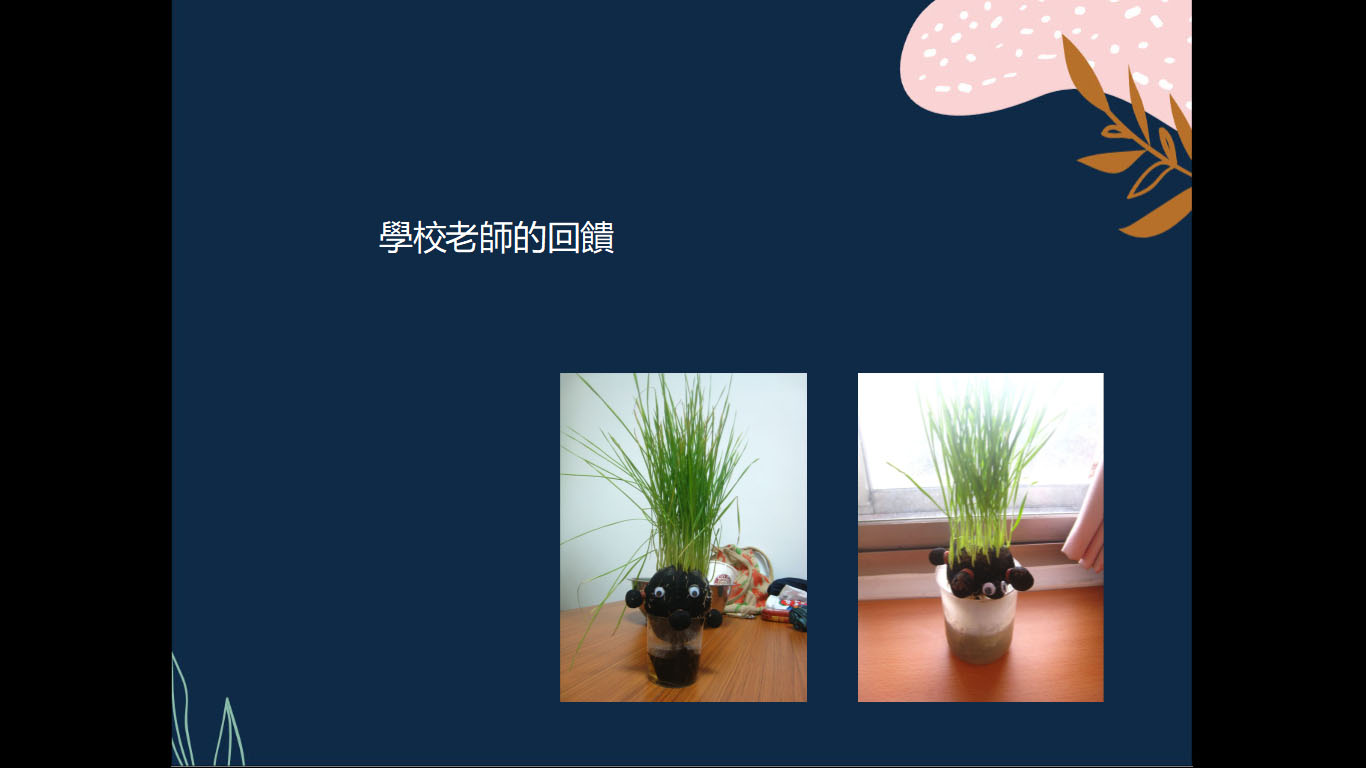
I was invited to give a talk on my experience of promoting public art on campus and working with the students and teachers of Yeliou Elementary School, New Taipei City, in 2011, for the staff of Keelung Zhonghe Elementary School.
Below are a few images from the presentation slides:




 發表文章
所有留言
發表文章
所有留言